Uthaya has demonstrated strong technical expertise in supporting the transformation of traditional ship-to-shore and container-handling operations toward semi-automated and automated systems — integrating automation technologies with existing equipment, supporting operational teams through technological change, and developing practical solutions to the challenges automation creates.
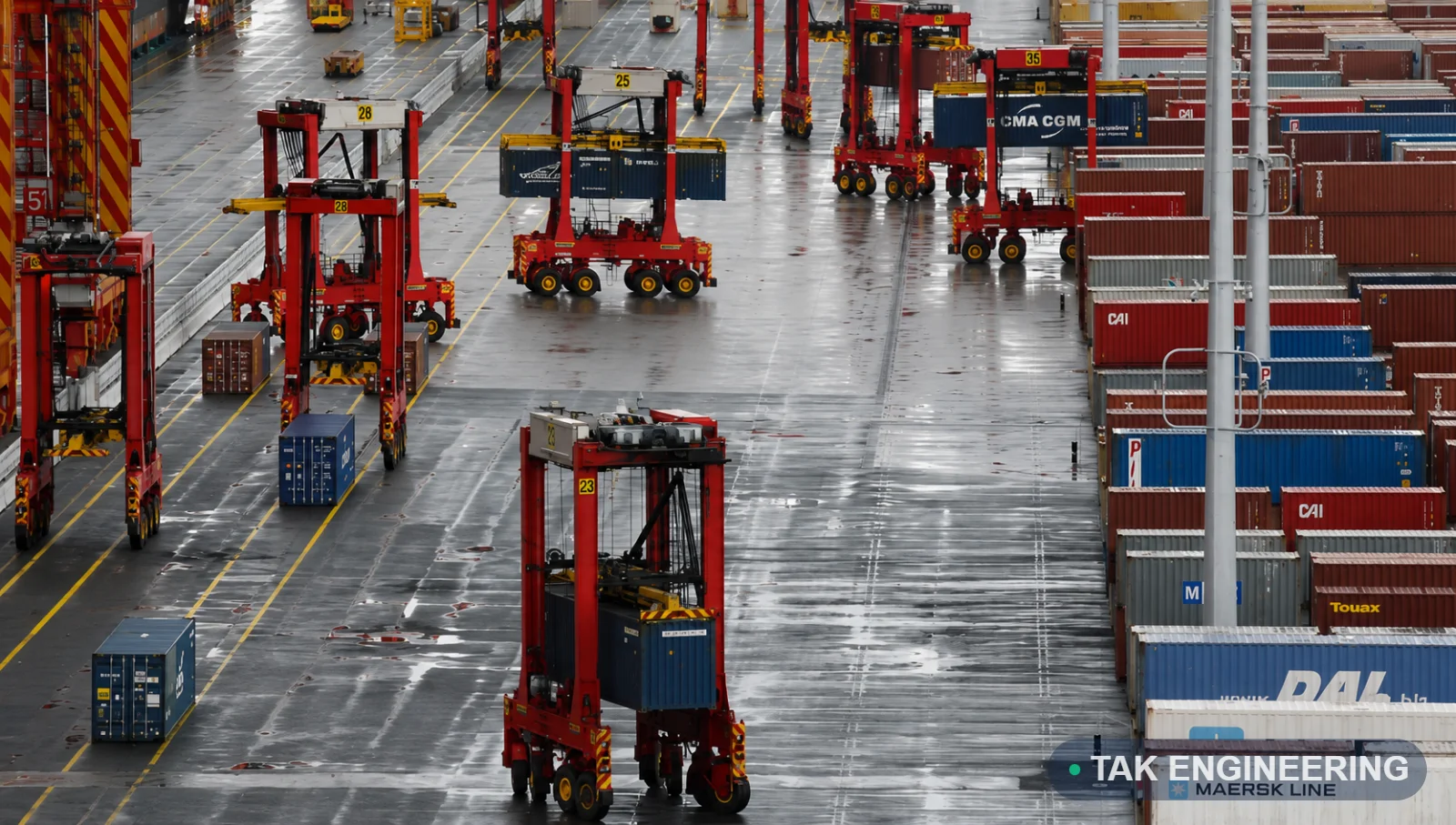
One notable example involved an automated straddle carrier fleet. During early implementation and software optimisation, the automated operating system frequently stopped and restarted the onboard diesel engines. Some straddle carriers experienced approximately 80–90 engine starts per day, placing significant demand on conventional lead-acid starter batteries and affecting fleet reliability.
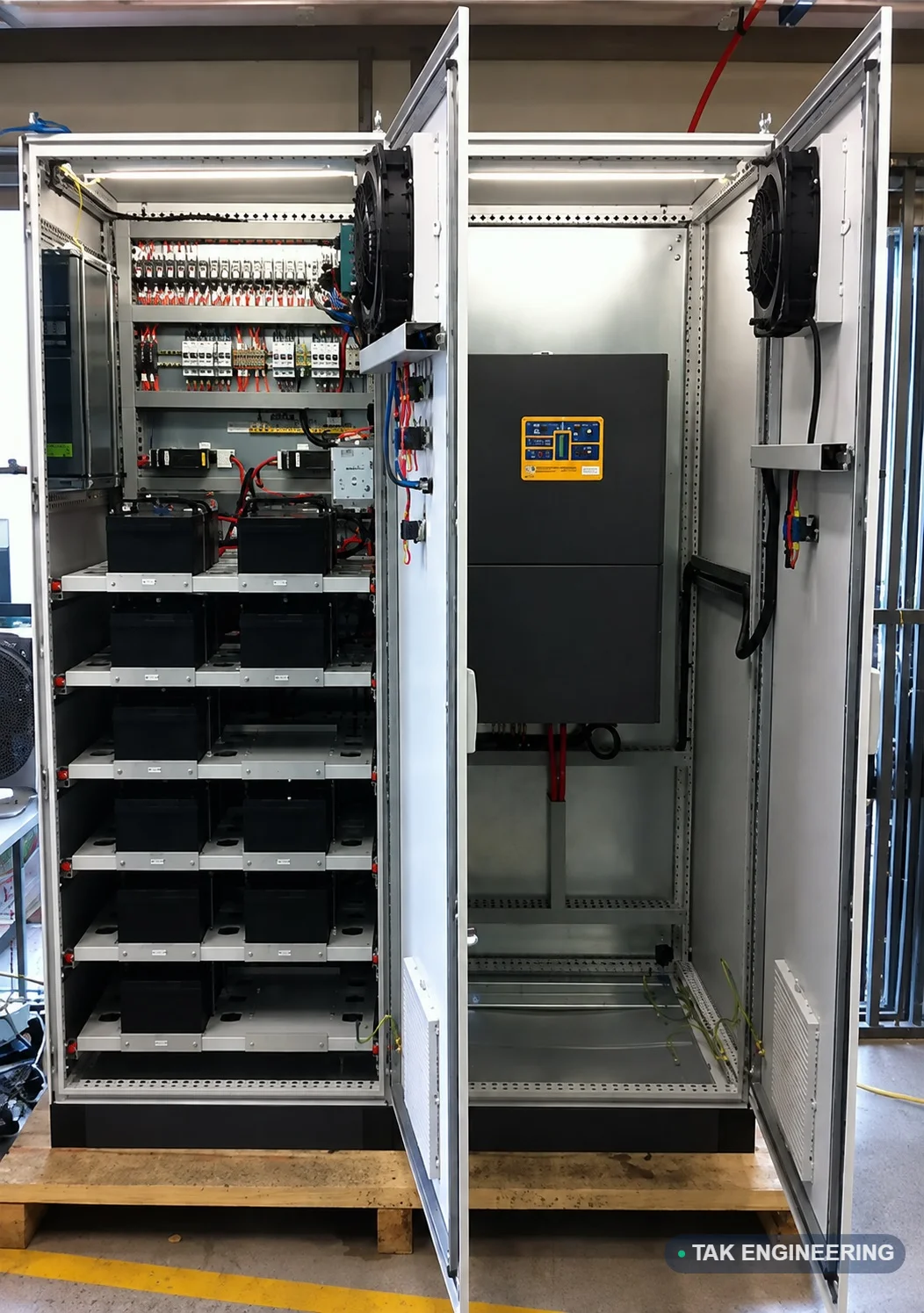
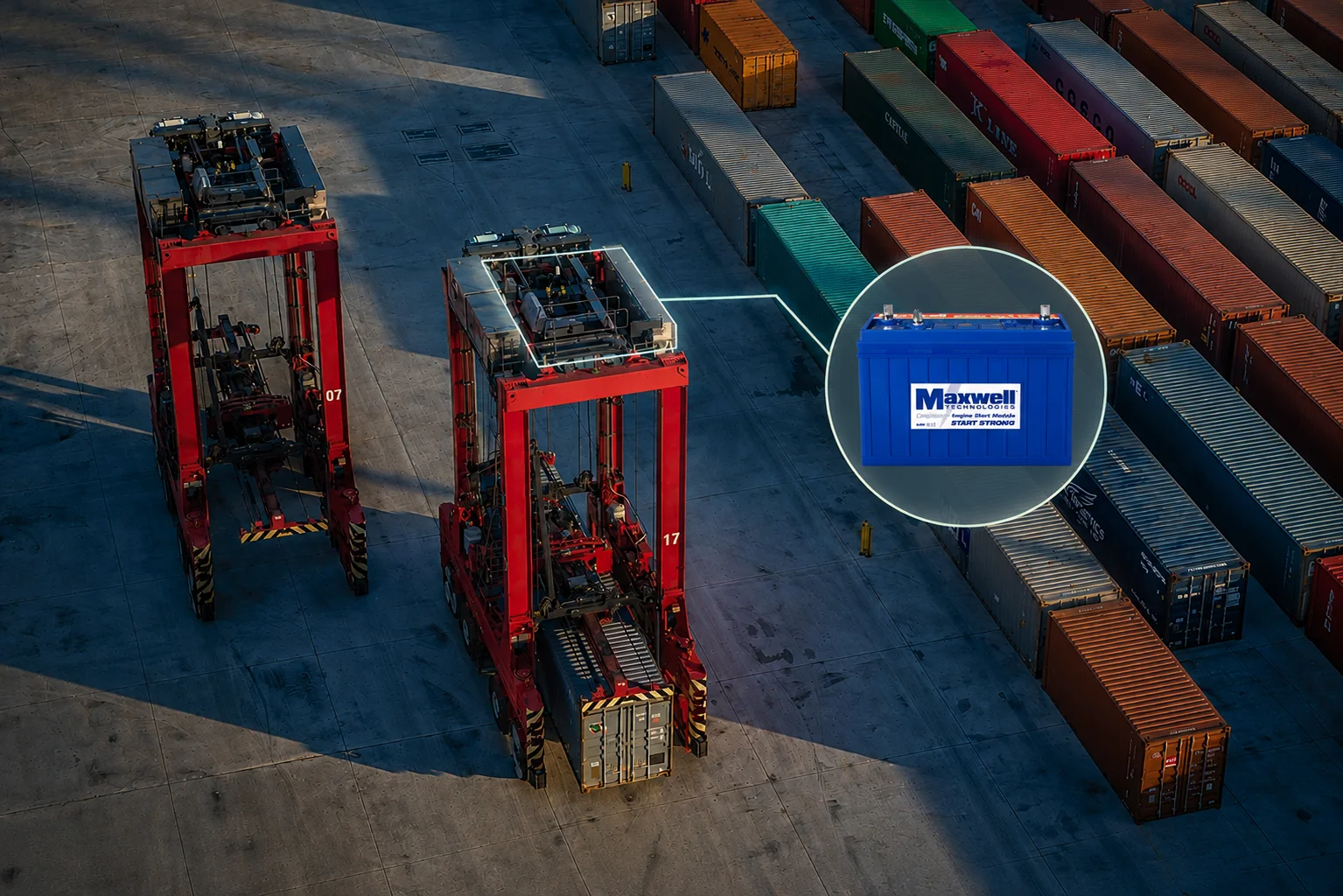
Understanding both the technical problem and the terminal's requirement for high equipment availability, Uthaya investigated alternatives to conventional starting batteries. He proposed a supercapacitor-based Engine Start Module (ESM) to provide reliable high-current engine starting under frequent start-stop operation.
The reliability stakes were high. Automated straddle carriers operate within a fully automated yard where personnel access is restricted. When a machine goes down with a starter fault, it cannot simply be attended in place — recovering it requires operational intervention, effectively shutting down a section of the automated yard so the machine can be safely retrieved. Each failure therefore carries a disproportionate impact on terminal productivity.
Rather than rolling the technology out across the fleet immediately, he developed a controlled trial strategy. A selected straddle carrier was configured with a dual starting arrangement — retaining the existing lead-acid battery while incorporating the Engine Start Module — allowing the technology to be evaluated under real terminal conditions while maintaining operational redundancy.
Following successful trials and demonstrated reliability, the solution was progressively implemented across the fleet, significantly improving engine-start reliability and reducing operational interruptions associated with starter-battery performance.
The field-proven Engine Start Module technology was subsequently recognised by the straddle carrier OEM, Kalmar, and incorporated into later straddle carrier designs — remaining a standard part of the starting system until the introduction of hybrid machines, where the engine-start function is now supplied by the onboard hybrid battery.
The initiative reflects TAK Engineering's approach: understand the operational problem, evaluate the technology, prove the solution in the field, and implement it with minimal disruption to operations.